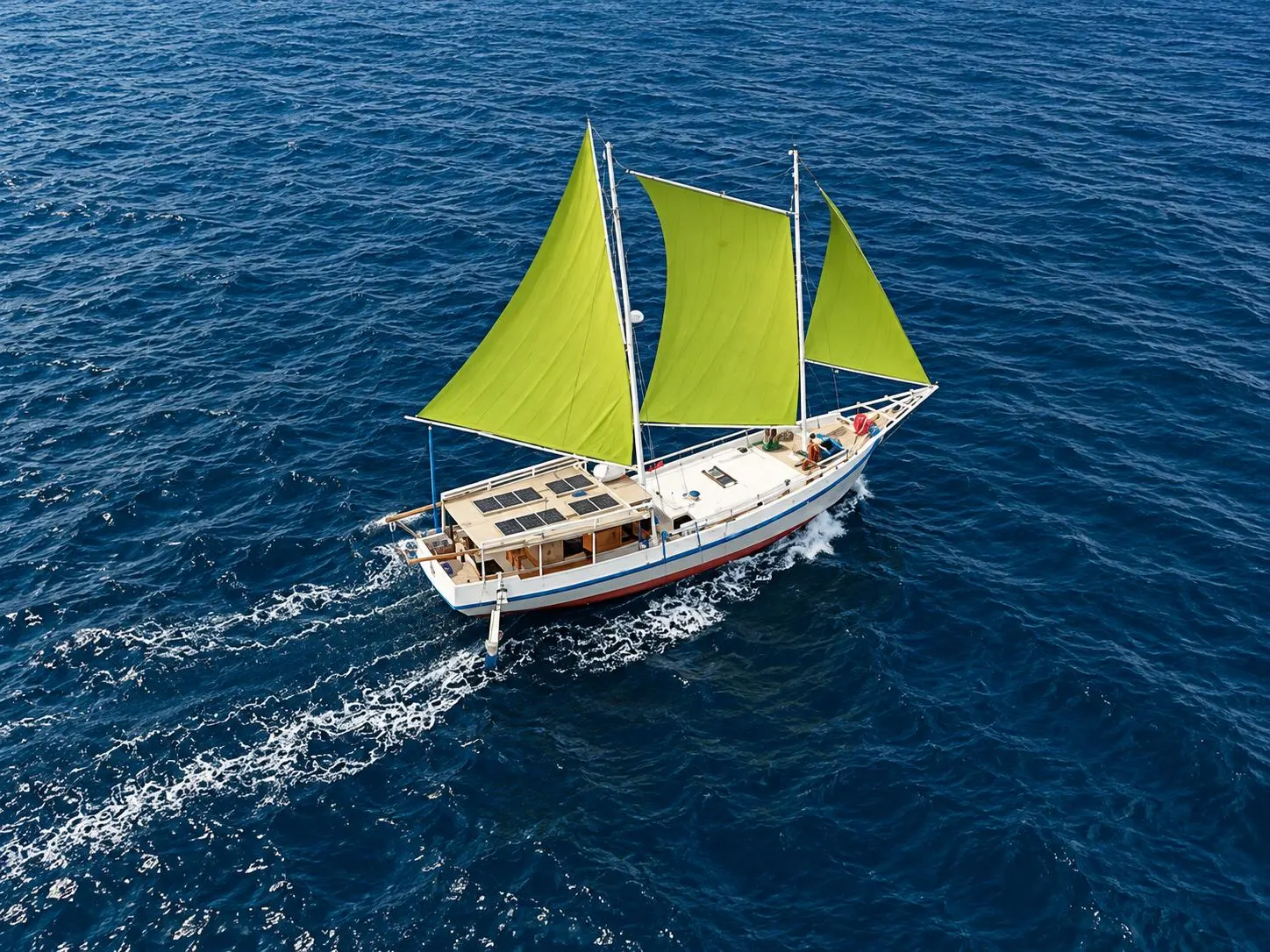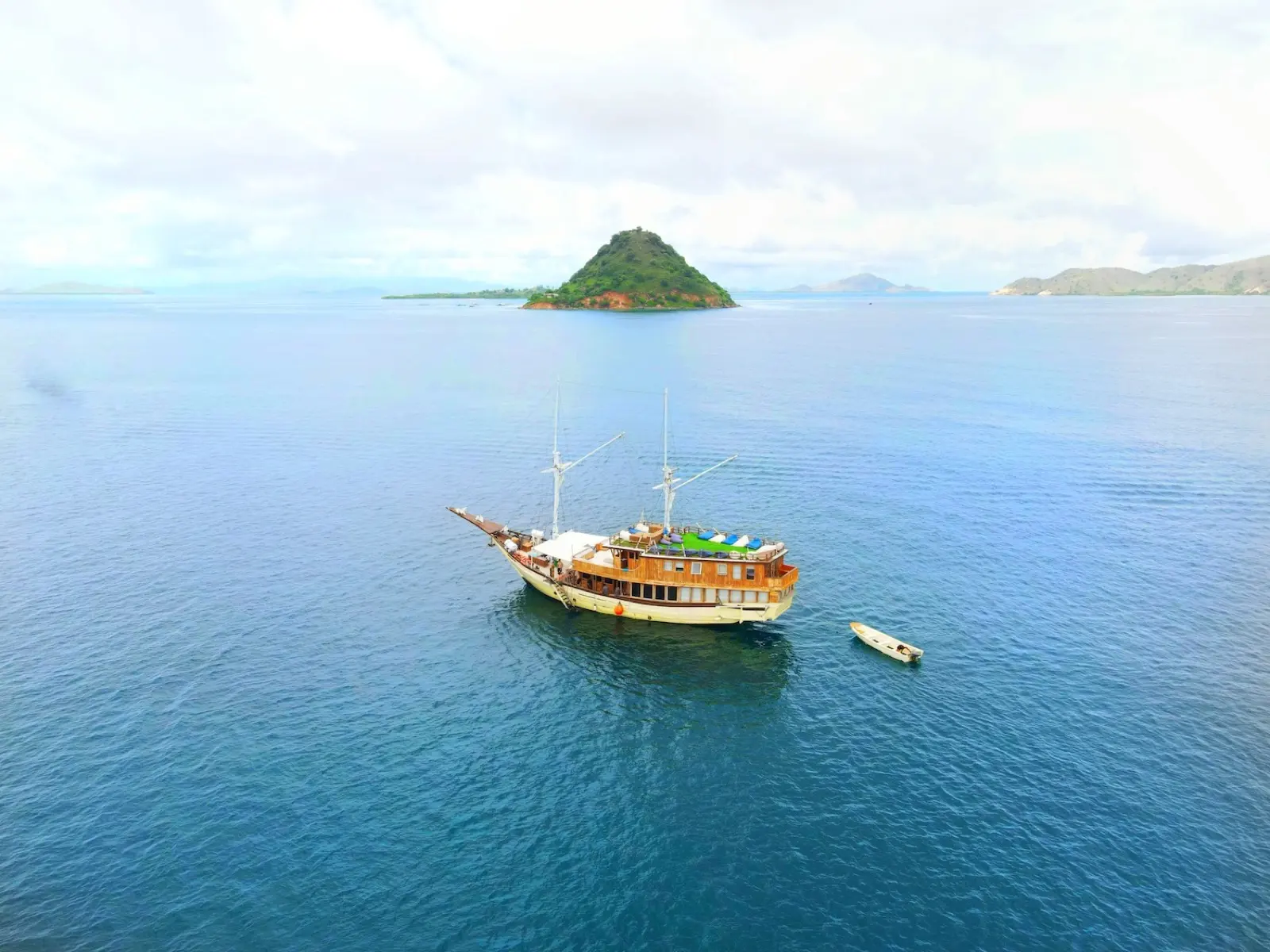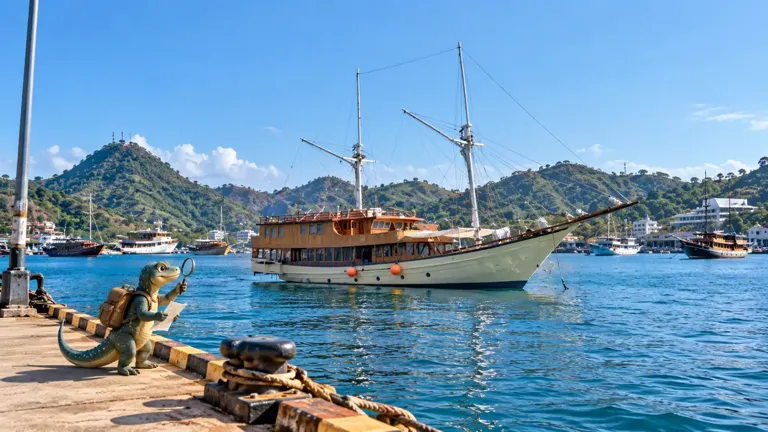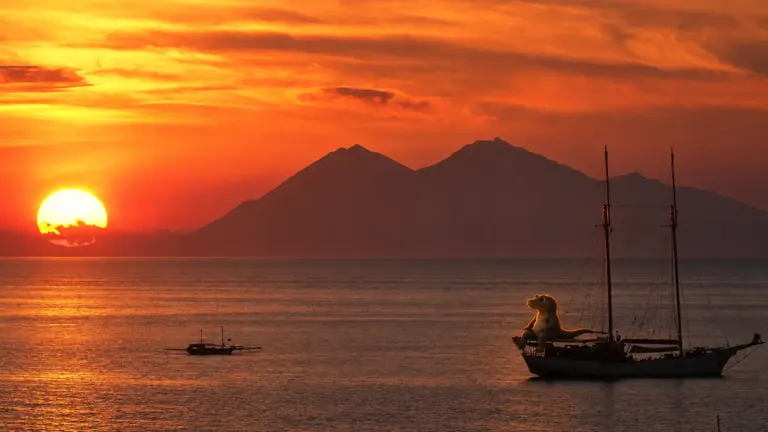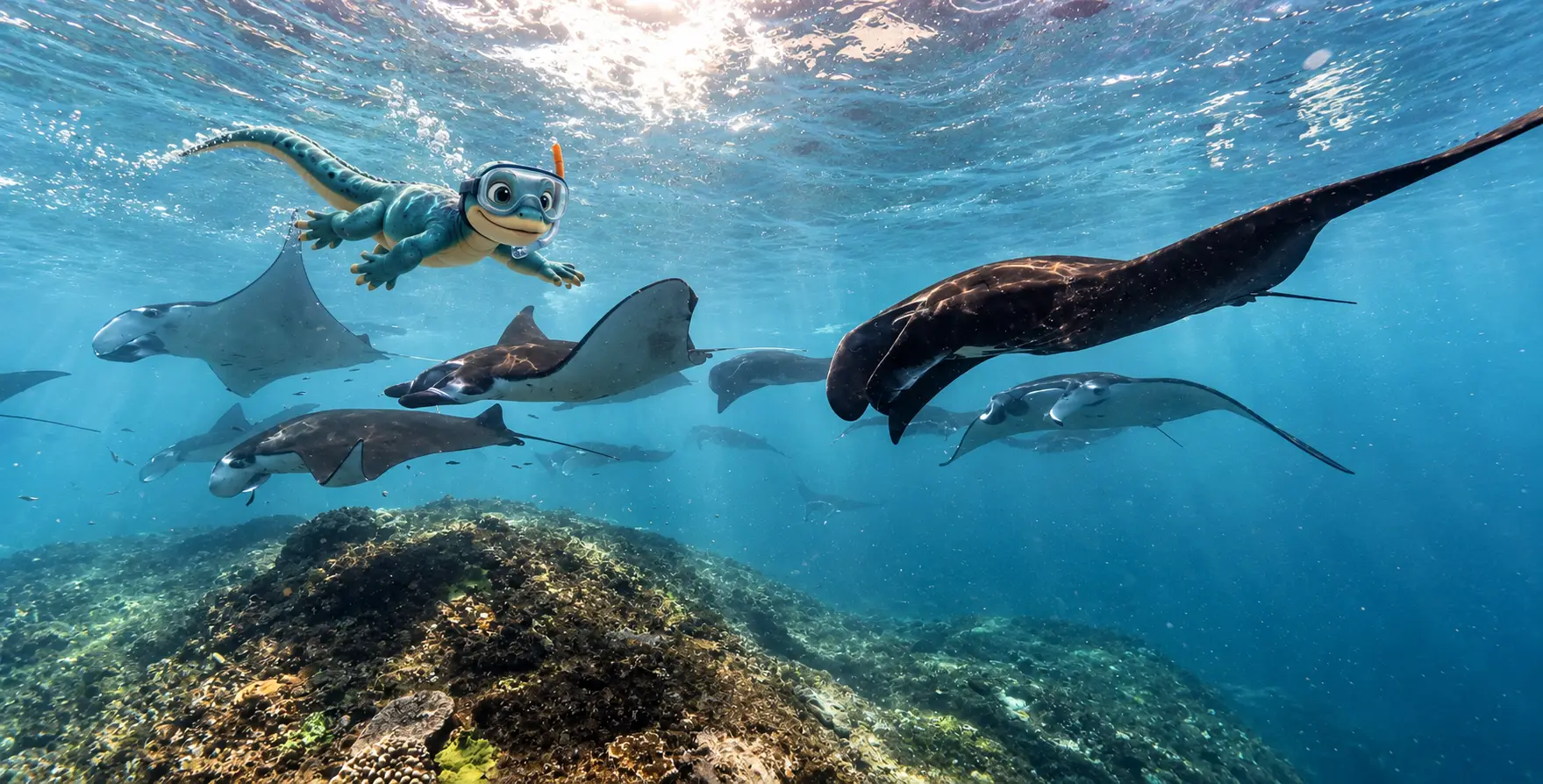

The most realistic place to snorkel with manta rays is Karang Makassar (Manta Point), right in the central area of Komodo National Park. Almost every 3 day 2 night open trip stops there on day two.
Your best chance of meeting a group of mantas is in the northwest monsoon (November to April), while sightings tend to drop in August and September, according to a study by Germanov et al. (PeerJ, 2022). Still, mantas are wild animals of the open sea, so there is no guarantee one will turn up.
Where Manta Rays Gather in Komodo
According to Germanov et al. (PeerJ, 2022), Komodo's waters are one of the most important reef manta (Mobula alfredi) habitats in the world, with at least 1,085 individuals identified (PeerJ). There are four main sites: Cauldron in the north, Karang Makassar and Mawan in the centre, and Manta Alley about 35.5 kilometres to the south.
For tour boat and open trip guests, the most relevant and easiest site to reach is Karang Makassar (Manta Point). It is open to visitors year round and receives more boats than any other site in the park. The Komodo National Park office has also published a study on manta sightings at Karang Makassar (Komodo National Park office).
The Months With the Best Odds
Komodo has two seasons: the northwest monsoon (November to April) and the southeast monsoon (May to October).
The biggest feeding groups at Karang Makassar were recorded in the northwest monsoon, with up to 30 mantas in a single day (PeerJ). In this period, nutrient-rich water flows in from the Flores Sea to the north. Sightings at Karang Makassar and Mawan were lowest in August and September.
One thing that is rarely mentioned: strong winds from December to February sometimes limit tour boats from reaching the central and northern areas. So the month with the most mantas is not always the month with the calmest sea. Factor that in when you choose your dates, especially if you get seasick easily.
Boats That Stop at Manta Point
Most 3 day 2 night Komodo open trips schedule Manta Point on day two, together with Padar Island, Pink Beach and the Taka Makassar sandbar. The Ayla, for example, closes day two with a swim among the mantas here.
Keep in mind that Manta Point has very strong currents. The final call on getting in the water rests with the captain, for the guests' safety, as the Capt Octopus page makes clear. If the current is judged too dangerous that day, the snorkel moves to a safer spot.
Rules for Snorkelling With Mantas
Manta rays have been protected by the Indonesian government since 2014 (Mongabay, 2026). To protect their habitat, the Komodo National Park office limits how many boats and people can be in the water at Karang Makassar at the same time.
In the water, follow this code of conduct:
- Do not touch. Watch from the surface.
- Do not chase. Let the mantas swim past you in their own time.
- Keep a safe distance. Leave clear space in front of and above their path.
- Follow your guide. Local guides know the current and will signal when you need to get back on the boat.
- Always wear a life jacket. The current at Manta Point is known to be strong, and a life jacket saves energy and keeps you calm at the surface.
What No One Can Promise
Manta rays are wild animals that roam freely. No boat operator in Labuan Bajo can guarantee an encounter. The best you can do is pick the dates with the highest odds, follow the safety instructions and enjoy whatever the sea brings that day.
Not sure which dates avoid the rough seas, or looking for a boat whose route stops at Manta Point? The Open Trip Komodo team is on the ground in Labuan Bajo. Message us on WhatsApp, tell us your month and we will help you pick the best boat.
Find your boat: 3 day 2 night open trip dates or all trips and phinisi boats.
FAQ
Where can we snorkel with manta rays in Komodo?
The main spot, and the easiest for tour boats to reach, is Karang Makassar, better known as Manta Point. It sits in the central area of Komodo National Park.
What is the best month to see manta rays in Komodo?
Your best chance is in the northwest monsoon, from November to April, when nutrient-rich water flows in. The lowest odds are usually in August and September.
Am I guaranteed to see manta rays on an open trip?
No. Mantas are wild animals of the open sea, and no operator can guarantee they will be there when your boat stops at Manta Point.
Do I need to dive to see manta rays?
Not necessarily. At Karang Makassar you can see mantas clearly just by snorkelling at the surface.
Which open trips stop at Manta Point?
Almost every regular 3 day 2 night sailing includes Manta Point on day two. Getting in the water still depends on the current that day and the captain's approval.