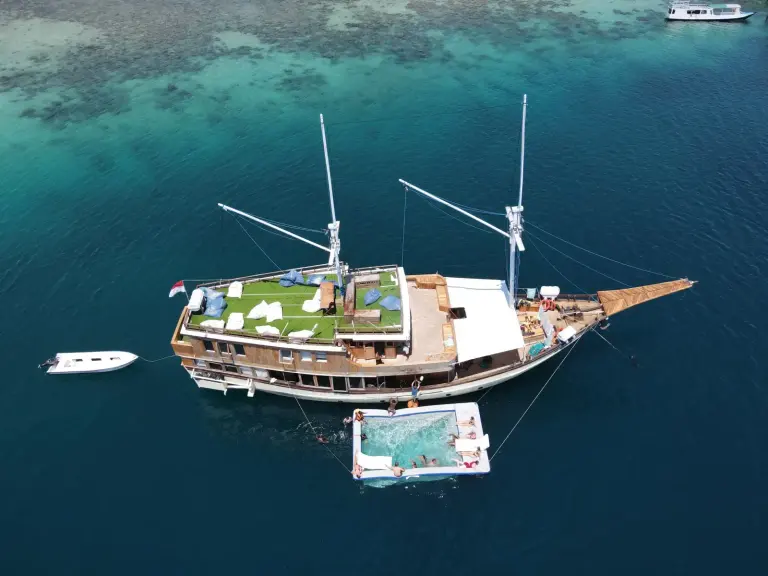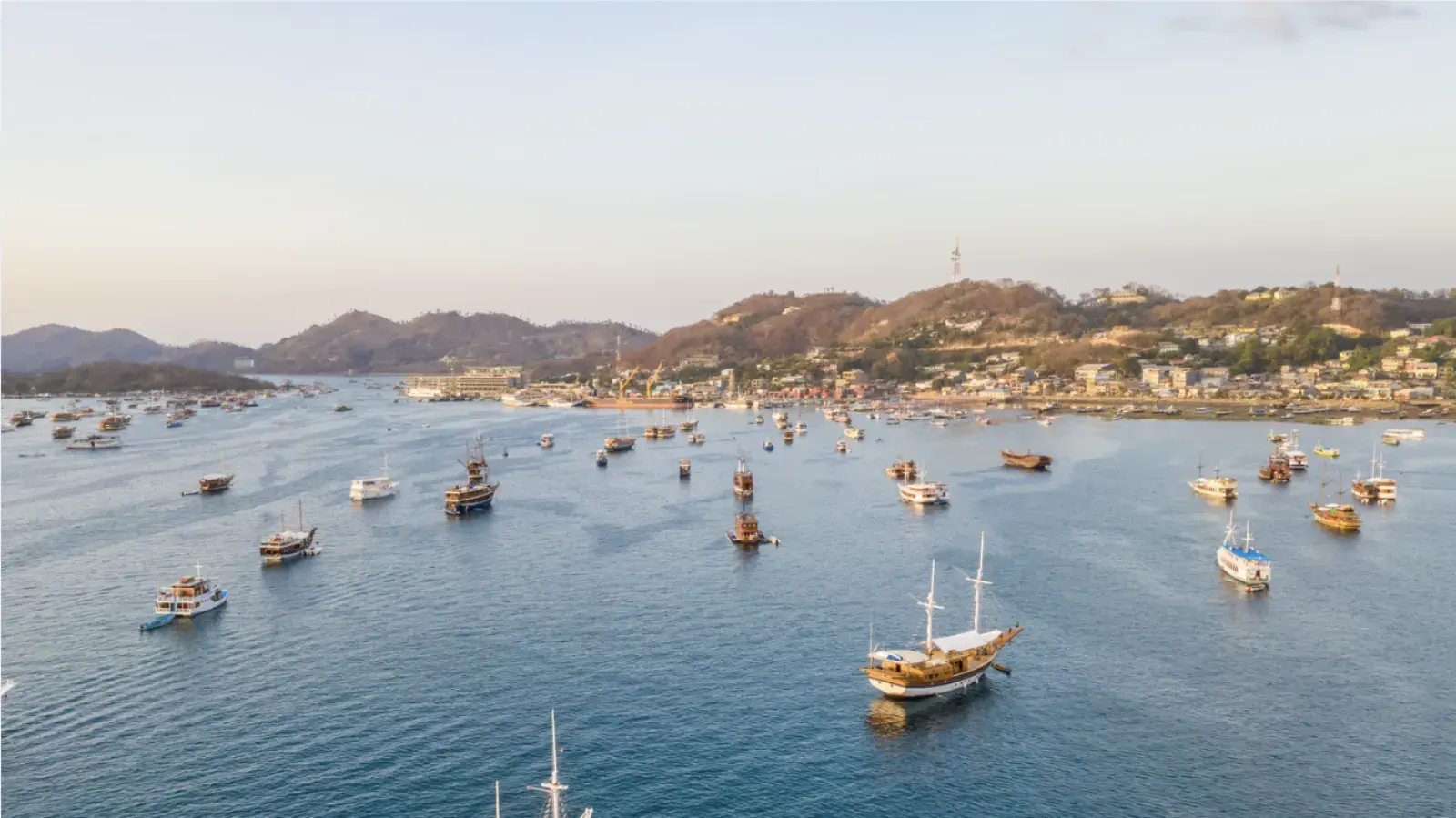

You are about to book a boat for the Komodo loop, and a fair thought stops you: how do you know this particular boat is actually safe, when anyone can post nice photos online? It is worth asking before you step aboard. The short answer is that Komodo's tour boats are safe for most travellers, and serious accidents are rare. But safety is not an accident: there is a system behind it, seaworthy boats, crews who know the water, and rules that hold boats in port when the weather is dangerous. Trouble usually starts when an operator cuts a corner around that system. The good news is you can choose a safe boat once you know what to check. Here is how, plus one real case that shows why it matters.
What makes a tour boat safe or not
A safe boat has a few layers. First, the boat is seaworthy and holds an official sailing approval (SPB) issued by the harbour master before it departs. Second, the captain and crew genuinely know the sea, not just someone holding the wheel. Third, there is basic safety equipment: a life jacket for every passenger, and a guide who briefs you before you snorkel. And most important, the operator follows the rules, so when the weather is bad and there is a sailing ban, they do not push on. When one of these layers is missing, the risk goes up.
It helps to know what each layer looks like in practice. A seaworthy boat is not just floating: it has working engines, enough life jackets for everyone onboard, and a captain who checks the forecast before leaving. A real safety briefing is short but specific, where the life jackets are, which snorkel spots have strong current, and what to do if you get tired in the water. None of this is fancy, and any operator that takes safety seriously does it as a matter of routine, not as a favour.
The lesson from a real case
Why is this not just theory? In December 2025, the tour boat KM Putri Sakinah set off from Labuan Bajo with a group, mostly tourists from Spain, despite a BMKG extreme-weather warning. The trip ended in tragedy, with lives lost. It later emerged that the captain held an invalid, bought certificate, meaning he was not genuinely qualified to command the boat. The Labuan Bajo District Court sentenced the captain and a crew member to prison for the negligence that caused the deaths (source). Two safety layers failed at once here: an unqualified crew, and the reckless choice to sail despite a weather warning. That is the combination to avoid.
The system that actually protects you
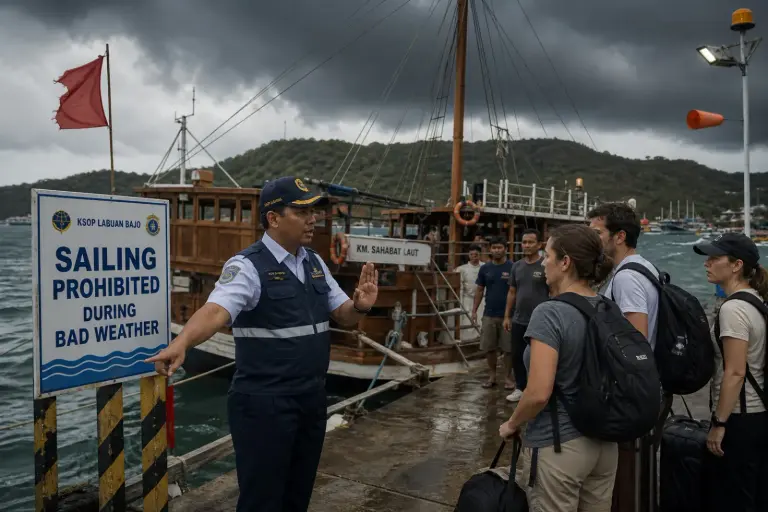
The good news is there is a system built to prevent exactly this. Before a boat may sail, the harbour authority (KSOP) issues a sailing approval (SPB), and when the weather is dangerous it is withheld, which is the sailing ban. It is based on wave and wind data from BMKG. In early 2026 alone the system was used repeatedly: SPB for all tour boats was suspended on 5 to 8 January, again in late January (29 January to 1 February), and in May sailing was restricted to the nearest route when swells rose.
It is not a verbal announcement but a formal, numbered notice signed by the head of KSOP, with the dates and the BMKG data behind it. Here is what one looks like:
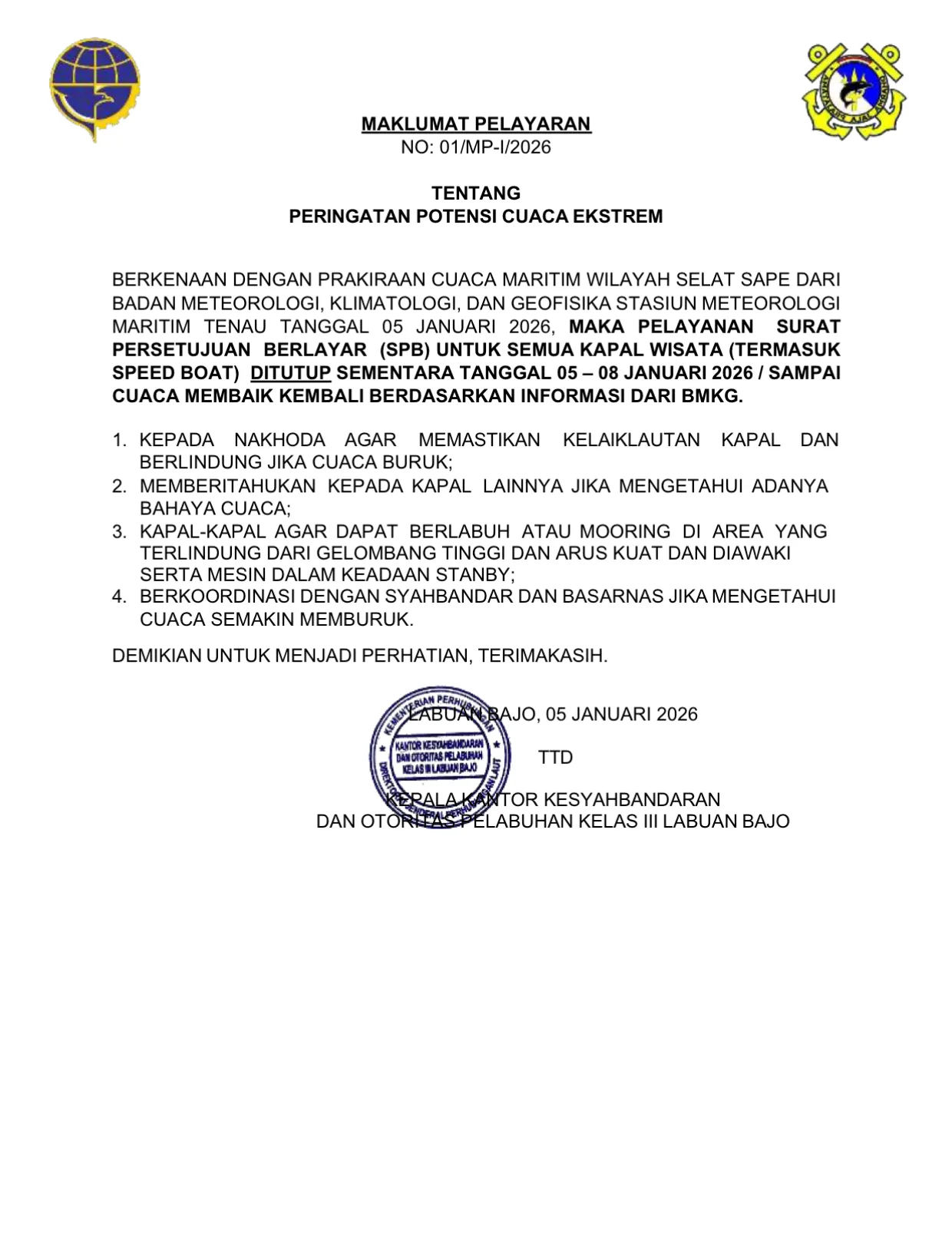
BMKG classifies wave height from calm to extreme, and once conditions reach the dangerous range, boats are held. So a sailing ban is not red tape, it is an emergency brake that protects you. We go deeper on it in sailing bans in Labuan Bajo.
What the wave numbers actually mean
When BMKG and KSOP talk about wave height, they use a simple scale. Up to half a metre is calm, half a metre to 1.25 metres is low, 1.25 to 2.5 metres is moderate, 2.5 to 4 metres is high, and anything above that is very high to extreme. The bans in early 2026 kicked in when forecasts pushed into the moderate range and above, with strong wind gusts on top. So when you hear that swells reached 2.1 metres, that is the upper edge of moderate, choppy enough that small tour boats are held back. You do not need to read the forecasts yourself, but it helps to know the numbers behind a ban are not arbitrary.
How to make sure your boat is safe
A few things you can check before and during the trip:
- Pick an operator that clearly respects sailing bans. Ask upfront: if there is a ban, what happens to the trip? A good one postpones rather than pushing on.
- Make sure there are life jackets and a safety briefing. A proper boat provides a life jacket for everyone and a guide who briefs you before you get in the water.
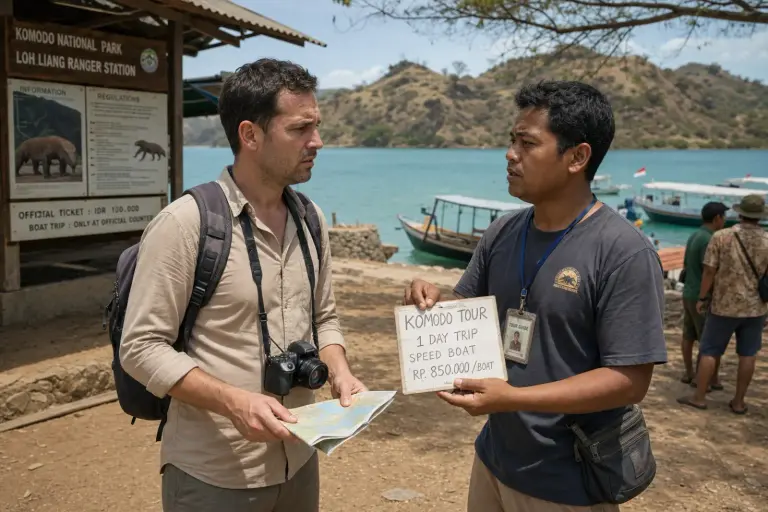
- Do not be tempted by the cheapest price. A price that does not add up is often where safety gets cut first.
- Check the operator is real and has a track record. A team you can reach, genuine reviews, ideally based in Labuan Bajo. If you want to go deeper on choosing a safe, scam-free operator, we cover it in is an open trip to Komodo safe.
- Trust your gut on the day. If the sea looks rough and a boat is still pushing to leave, you are allowed to sit it out. No view is worth sailing into weather the authorities have already flagged.
How OpenTripKomodo handles this
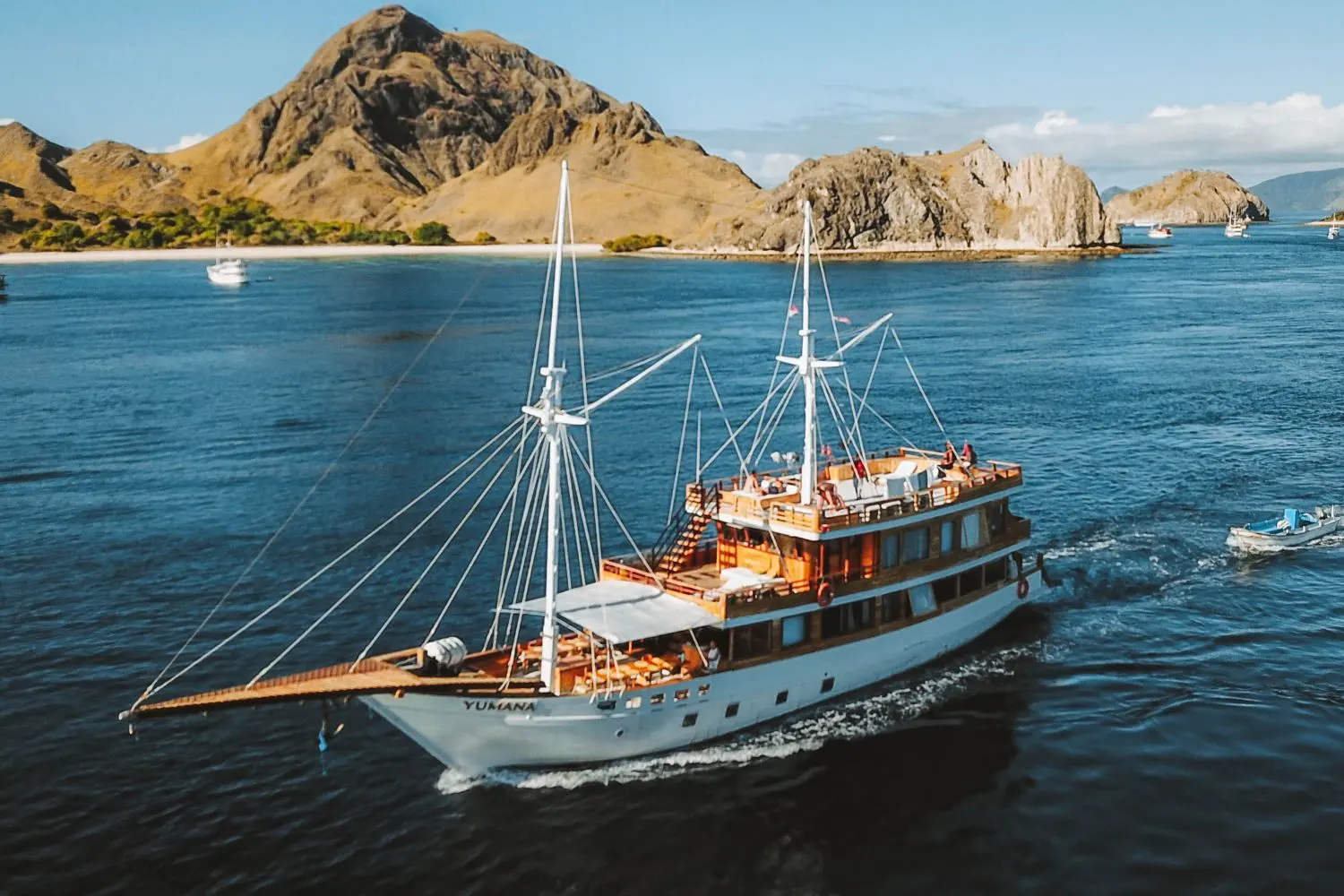
At Open Trip Komodo, safety is part of the curation, not an afterthought. The operators are vetted by a local team based in Labuan Bajo that you can meet in person, the boats follow KSOP rules, and if there is a sailing ban or extreme weather, the trip counts as force majeure: you get a full refund or a reschedule, not a boat forced out to sea. That is the key difference between an operator who puts you first and one who puts the takings first.
Are Komodo tour boats safe?
For most travellers, yes, and serious accidents are rare. The risk rises when an operator cuts corners: an unqualified crew, no safety gear, or sailing into dangerous weather.
How do I know a boat is seaworthy?
A boat that sails legally holds an SPB (sailing approval) from the harbour master, which is only issued when conditions are safe. A proper operator is also open about the boat's condition, life jackets, and crew.
Has there been a tour-boat accident in Labuan Bajo?
Yes. The most prominent was KM Putri Sakinah in December 2025: it sailed despite a BMKG weather warning, the captain used an invalid certificate, and lives were lost. The captain and a crew member were sentenced to prison.
What does a good operator do in bad weather?
They postpone or reschedule the trip, follow the KSOP sailing ban, and never force a departure just to avoid a refund.