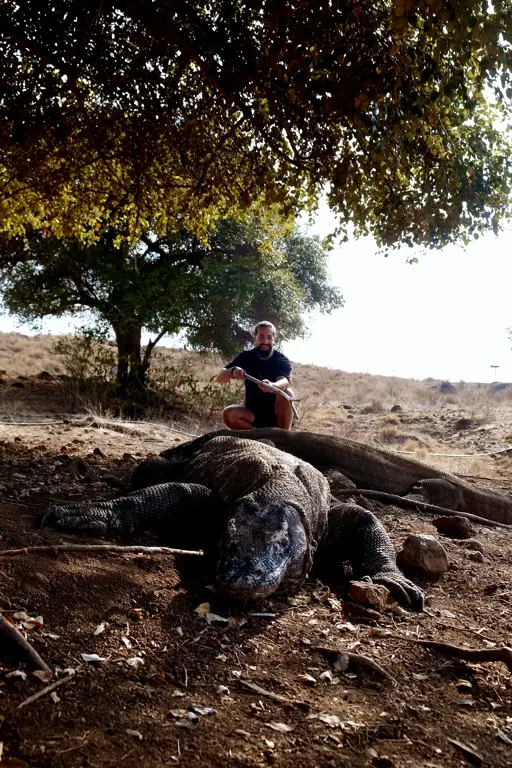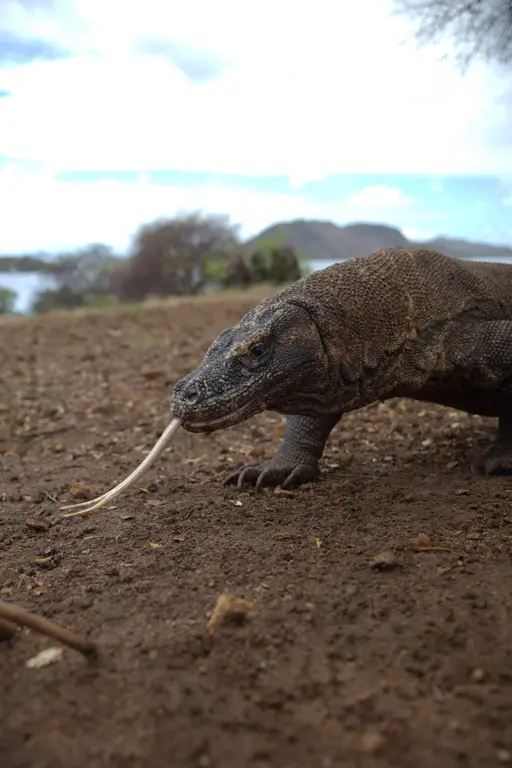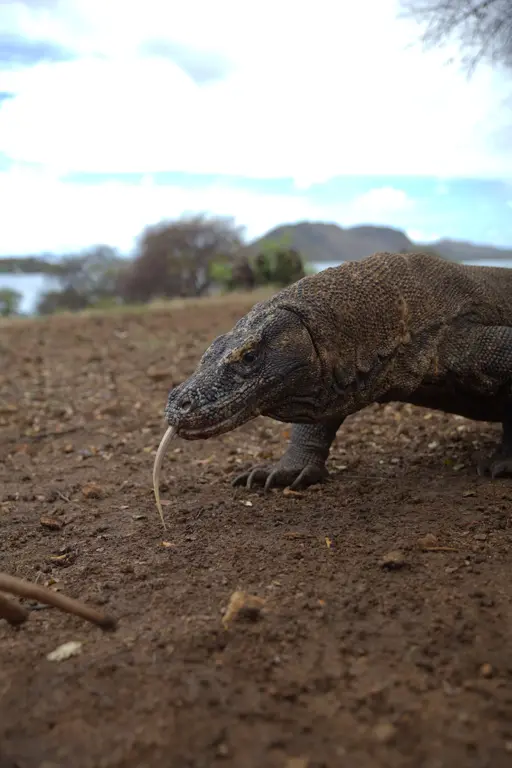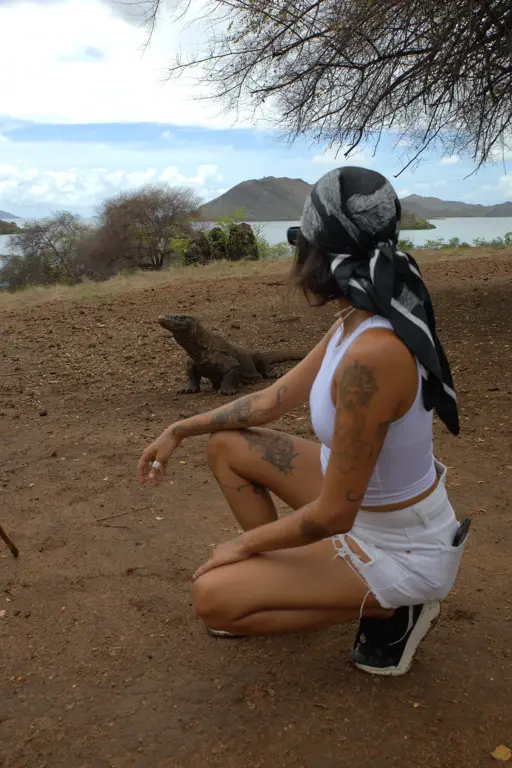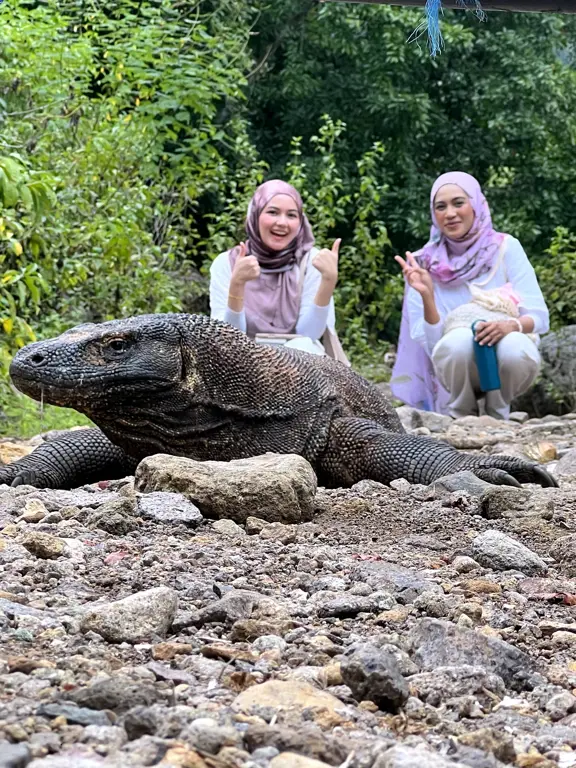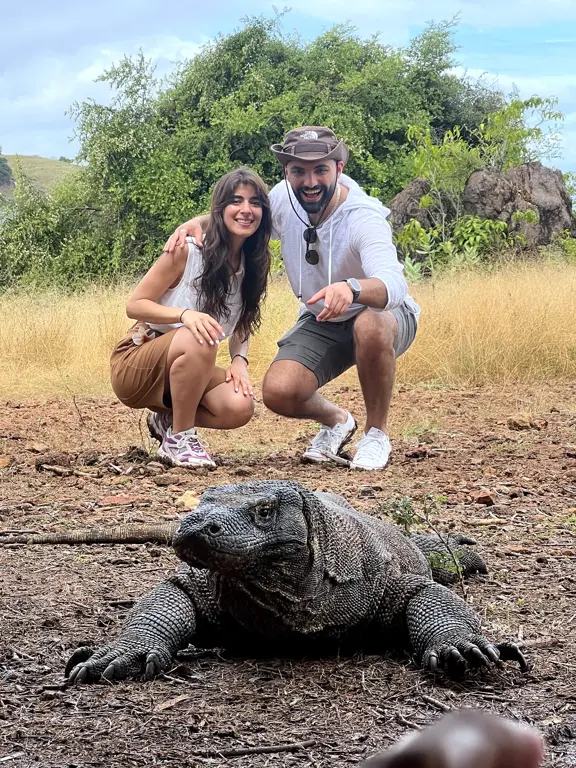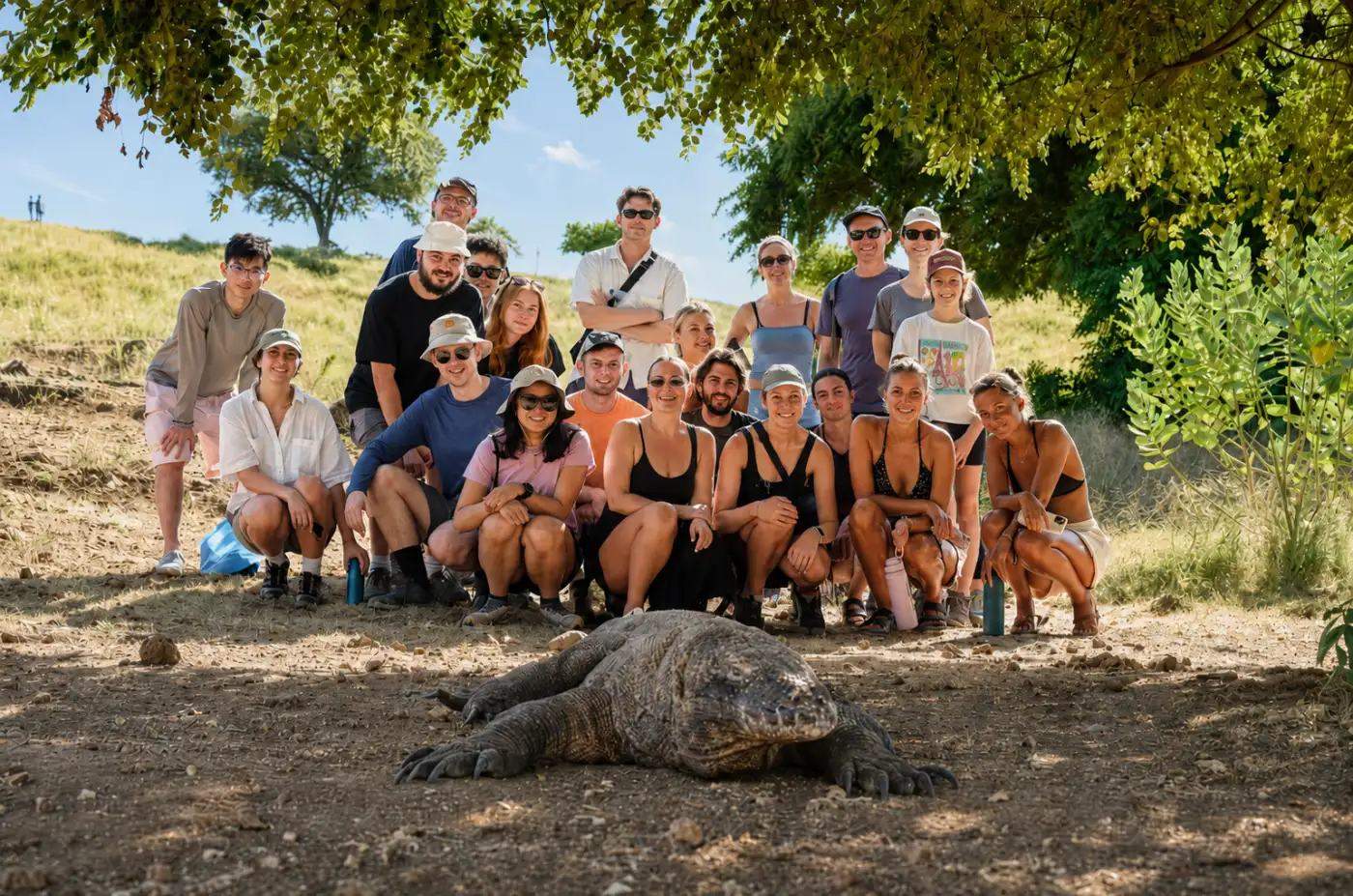

Attacks on visitors are rare: the park has recorded about 24 over 38 years. But Komodo dragons are genuinely wild and venomous, so your safety comes from how you visit, not from the animal being tame. It is a fair question when you see photos of a dragon a few steps from a line of tourists. Here is the honest picture: what the record really shows, why a bite is dangerous, and exactly how a ranger-guided visit keeps you out of trouble.
Are Komodo dragons actually dangerous?
Yes, they are real wild predators, and it is right to respect that. A Komodo dragon is the largest lizard on earth, up to three metres long, and it is an ambush hunter that normally takes deer, wild boar, and water buffalo. It is not a zoo animal and it is not tame. But "dangerous" and "likely to attack a tourist" are two different things. In practice, a dragon on a guided trek is far more interested in resting in the shade or finding its own prey than in a group of people walking past with a ranger. Its hunting style is part of why tourists are rarely the target: a Komodo dragon is an ambush predator, not a chaser. With big prey like buffalo it bites once and then waits for the animal to weaken over hours or days, rather than running it down over distance. A group walking calmly with a guide is simply not what it is hunting. The danger is real but the encounter is managed, which is exactly why you never walk among them without a licensed ranger.
What the attack record really shows
The numbers are reassuring once you actually look at them. Komodo National Park records show roughly 24 reported attacks between 1974 and 2012, with five deaths across that 38-year span. For a place that hundreds of thousands of people visit, that is rare. What matters more is the pattern behind those incidents, because it tells you exactly how to stay safe.
Almost every serious case involved someone away from a ranger or ignoring a warning. In 2007 an eight-year-old boy died after wandering into tall grass near a village, not on a guided trek. In 2009 a park ranger was bitten when a dragon came up the steps into his hut. In May 2017 a 50-year-old visitor was badly bitten on the leg after reportedly ignoring the rangers' instructions, and the park noted it was the first such incident in five years. The thread is consistent: trouble comes from being alone, from straying off the path, or from getting too close, not from a dragon hunting down a tour group. The village cases make sense too: people live on Komodo island, so dragons sometimes wander into the settlement after livestock and cross paths with someone on their own. A guided trek, where the route is watched and you are always with a ranger, is a different situation.
Do Komodo dragons have venom?
This one surprises people, so it is worth being straight about. For years the story was that a dragon's bite kills through filthy, bacteria-loaded saliva. A 2009 study led by biologist Bryan Fry, published in PNAS, changed that: Komodo dragons have venom glands in the lower jaw, and the venom works as an anticoagulant that stops blood from clotting and helps send prey into shock. So a serious bite is dangerous less because of infection and more because of bleeding. This is not meant to scare you, it is the reason the rules exist. Keep your distance and there is no bite, so the venom never matters. The point is to take the animal seriously, which a good ranger already does for you.





How rangers keep you safe
On every island where you see dragons, Loh Liang on Komodo and Loh Buaya on Rinca, you walk with a licensed park ranger, and the rule is simple: visitors are never let off on their own. The ranger carries a long forked wooden stick, and it is not for show: if a dragon walks toward the group, the ranger uses the fork to gently steer it away by the neck, without hurting the animal. Rangers keep the group at a safe distance, usually around four to five metres, and they read the dragons constantly, knowing which ones are resting and which are restless. They also set the route and the pace. This is the single biggest reason a Komodo visit is safe: with a ranger you are never the lone person who stumbles onto a dragon. At Rinca (Loh Buaya) there are usually short, medium, and long trek options, so you can match it to your energy and time. And you do not have to go hunting for them, the dragons are often resting near the ranger post, so you meet them in a watched area instead of poking through the bush yourself.
What you should and should not do
Most of this is common sense, and the ranger will brief you, but it helps to know it in advance.
- Stay with the group, never wander off just for a photo.
- Keep your distance, and never try to touch or feed a dragon.
- No sudden movements. If you see a dragon, stay calm and do not run, because a dragon can hit about 20 km/h over a short distance, and sudden movement reads as prey fleeing.
- On your period? Tell the ranger quietly at the start. Dragons have a very strong sense of smell, so it is just a precaution, not a reason to skip the trek, and you simply stay close to the guide.
- Wear closed shoes or trekking sandals.
- Most important, follow every instruction in the ranger's briefing.
How OpenTripKomodo handles the dragon visit
On an Open Trip Komodo trip, the dragon trek always uses the park's licensed rangers, and that is included in your package. One thing to know: the package price does not include the national park entrance ticket, so that sits on top. Our local team in Labuan Bajo sorts out the park entry and the ranger, the ranger briefs you before you land, and keeps the group together on the trek. If you want the fuller picture on choosing a safe, honest operator, we cover it in is an open trip to Komodo safe, and for boat safety on the water there is tour boat safety in Komodo.
Have Komodo dragons ever killed anyone?
Yes, but it is rare. Park records show five deaths between 1974 and 2012, and the serious cases almost always involved someone alone or off the path, like the 2007 incident where a boy wandered into tall grass near a village. On a ranger-guided trek with the group, the risk is very low.
Can I visit if I am on my period?
Yes. Visiting while menstruating is generally considered safe. Because dragons have a keen sense of smell, the simple precaution is to tell your ranger quietly and stay close to the guide during the walk. It is a courtesy heads-up, not a ban.
What should I do if a dragon comes near me?
Stay calm and do not run. Tell the ranger and let them handle it with the forked stick, which is exactly what it is for. Sudden movement is what you want to avoid, because running can trigger a chase response. Standing still beside your guide is the safe choice.
Is it safe to bring kids to see the dragons?
Yes, with care. Children must hold an adult's hand and stay in the middle of the group, never at the edge or running ahead, since most serious incidents involved someone small or alone. Tell the ranger you have kids and they will keep the group tighter.